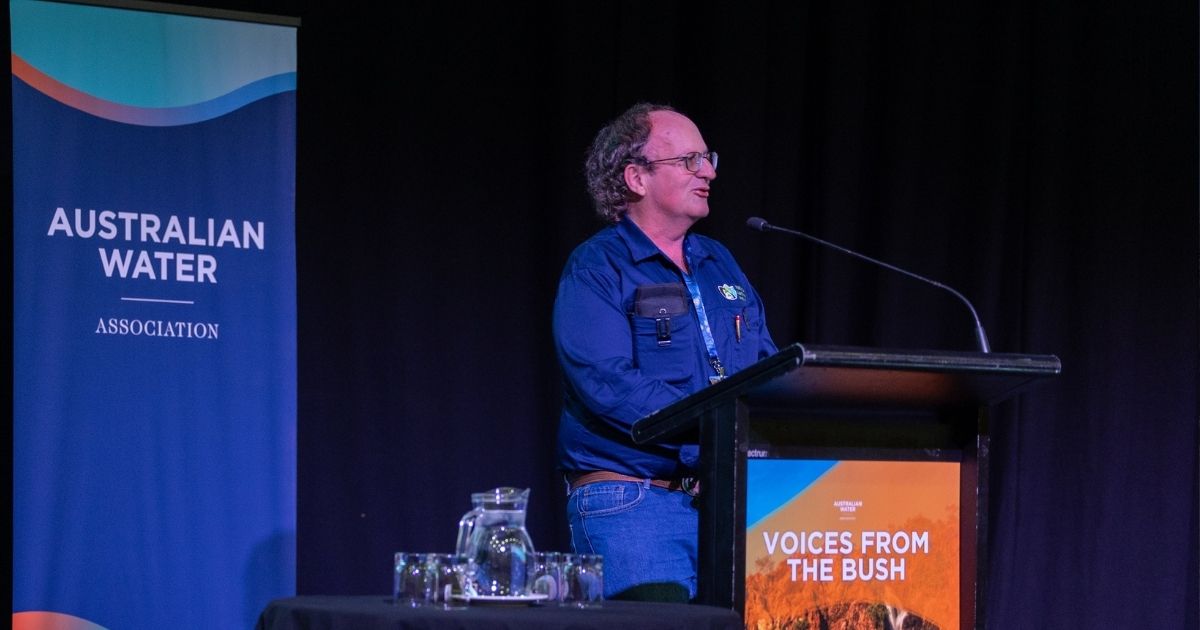
Trevor Meldrum, NLN First Nations Liaison Officer.
From the 14th of September to the 18th of September, we attended the Voices from the Bush Conference held in Mparntwe – Alice Springs. This huge event was an initiative from all of us who make the Australia our home.
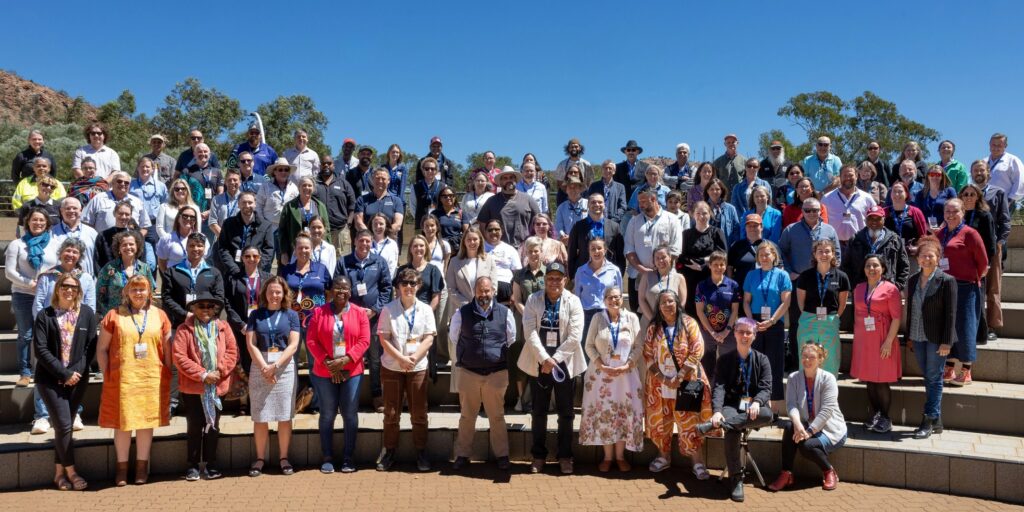
Traditional Owners of Mparntwe, and the Australian Water Association welcomed us to the start of the Voices from the Bush Conference with the theme Stronger Together – Creating Change.
The 2026 conference returned to Mparntwe (Alice Springs) with a strong emphasis on practical outcomes, community-led solutions, and First Nations leadership. It was organised by the Australian Water Association and brought together Traditional Owners, operators, researchers, industry practitioners and government partners.
The Mparntwe Traditional Owners welcomed myself to their special part of our country, for which I am deeply grateful.
This Voices from the Bush Conference brought together 2026 Traditional Owners, practitioners, researchers, facilitators, development professionals and community leaders from across Australia. I represented my culture and the National Landcare Network with expertise in Landcare and Caring for Country.
We also participated in the field trip on Tuesday where we attended the Alice Springs Centre for Applied Technology where we learned from the scientists and researchers about their modern technology and shared our Indigenous knowledge with our Australian people. Once again culture was at the forefront of two-way knowledge sharing.
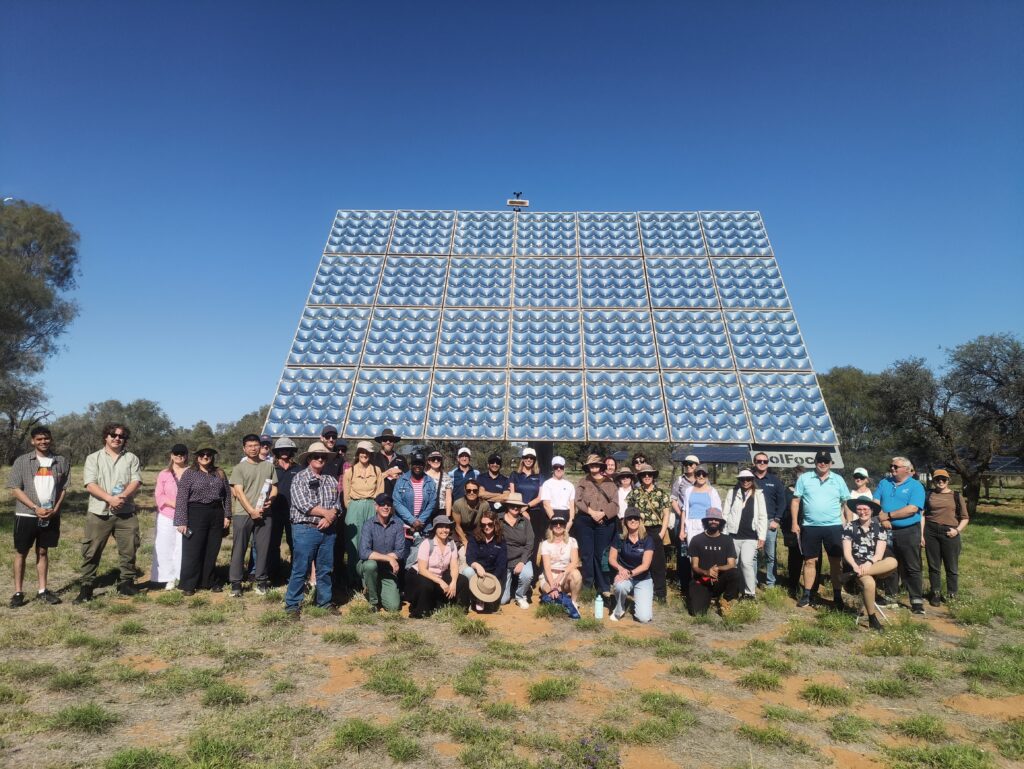
Delegates at the Conference Field Trip
We also attended the conference itself on Wednesday and Thursday.
We presented a keynote speech that highlighted how we use our traditional First Nations science and culture to community action can drive sustainable change in water, agriculture and rural development. I shared our stories on how we use our Indigenous cultural practices along with modern scientific knowledge to control invasive plants and animals across our country, Australia.
You can read the full article about my keynote titled ‘Looking after Country means looking at the whole system’, written by Cecilia Harris of the Australian Water Association, here.
In my keynote I drew on more than 33 years of land and natural resource management across Cape York to show what working together, and looking at the whole system, looks like on Country.
“There is no such thing as land, there is no such thing as sea, there is no such thing as air. Our land, sea and water are together because they are our mother and father,”
I said.
“If we don’t look after them, we cannot look after ourselves.”
Along with landscape restoration across Cape York, much of my work has been controlling pond apple, an invasive species that was affecting freshwater flows, sea grass beds, turtle nesting areas and dugong habitat along the Cape York coast. Years after the restoration began, I saw a dugong cow and calf in an area where dugongs had disappeared.
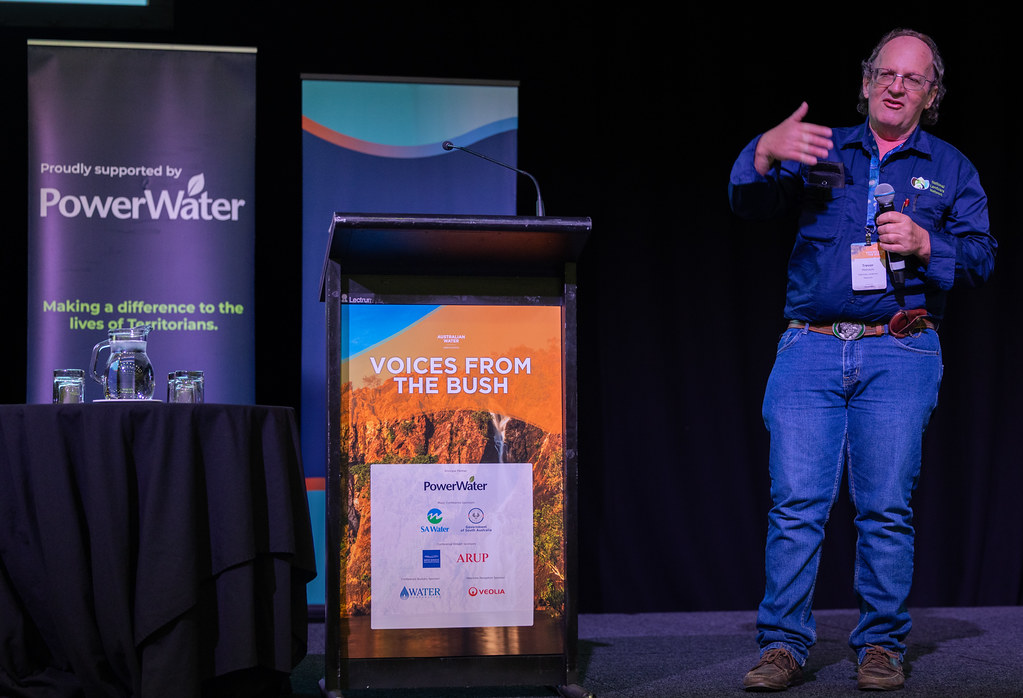
Trevor Meldrum presenting his keynote during Voices from the Bush Conference 2026
“I had a first-hand experience of what can happen when you do the work,” I said.
But achieving those outcomes required decision-makers to recognise that approaches developed for one location could not simply be imposed on another.
“One size does not fit all. We are trying to get our knowledge out, but we also want to learn from you and share our knowledge for the betterment of the whole of Australia, not just one part of it,” I said.
“None of us knows everything. I’d like to see us bring your people into our Country, take our people into your Country and work together across Australia, rather than being isolated in our little boxes. Scientific and technical expertise can work alongside Traditional Knowledge when we communicate clearly, listen to Country and stay open to learning.”
“The main thing is to talk plainly and talk from the heart.” I said.
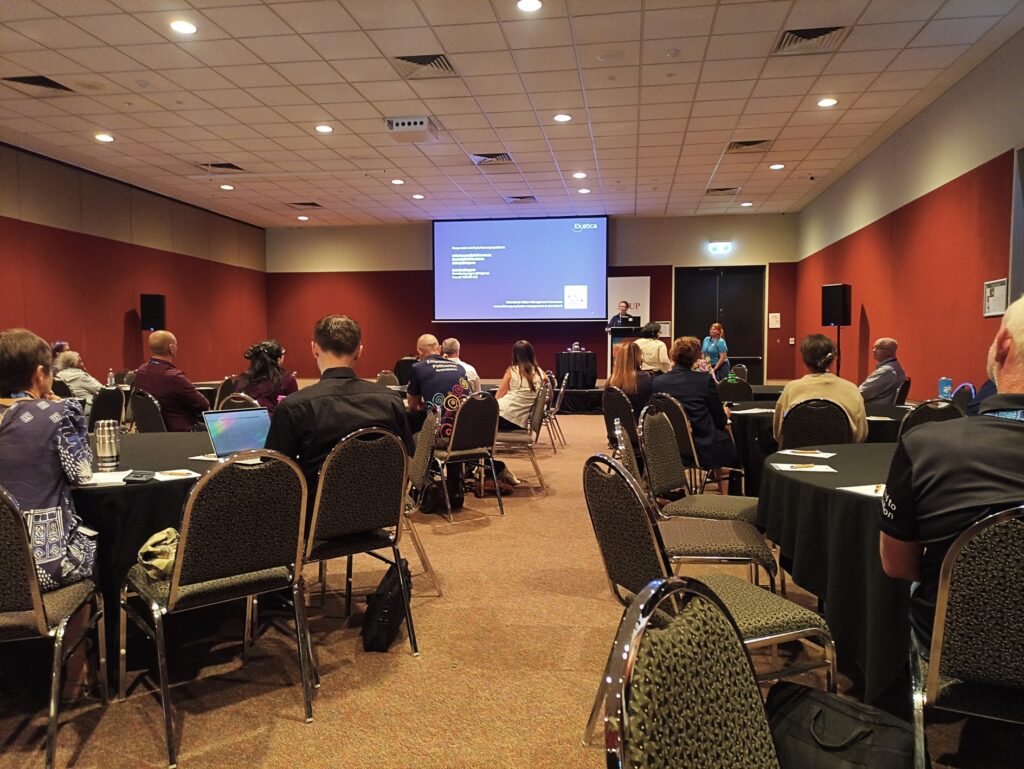
Facilitated Presentations
On day two we attended every session and we held a lot of discussions to be able to get our message across and to help broaden our networks to keep this work on going.
Our sessions examined First Peoples water governance and rights, enduring models for water ownership, cultural values in water planning and the realities of remote service delivery. The fact that Australia still has the Water Nullius covenant in place is a barrier for our people.
We are hoping to get the idea of Water Nullius being abandoned just like they have with the Terra Nullius concept.
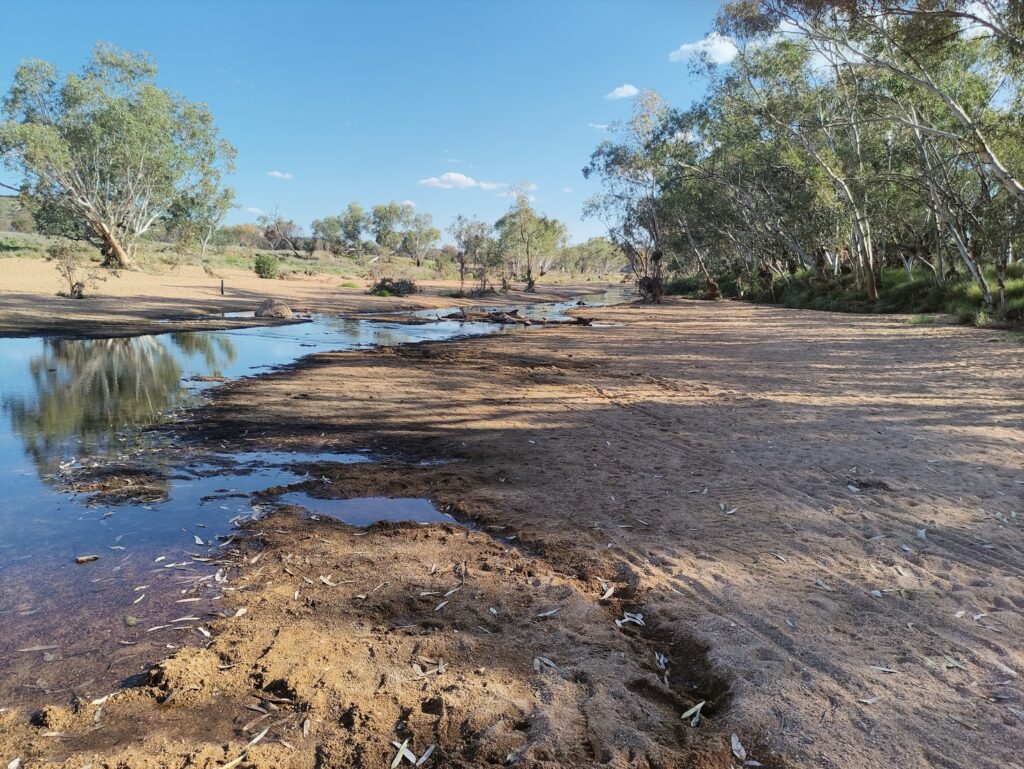
Our Sacred Waters
Interactive workshops and presentations also explored better coordination between housing, energy, water and waste systems, career pathways, cultural immersion, workforce planning and two-way learning grounded in Country. The program then moved into facilitated yarning circles focused on reflection, courage and action.
Day two concluded with facilitated yarning circles, giving delegates an informal setting to reflect on the conference, share perspectives and identify actions they could take within their communities and organisations. The discussions returned delegates to the challenge set at the conference’s opening: to move beyond listening and carry what they had learned into their everyday work.
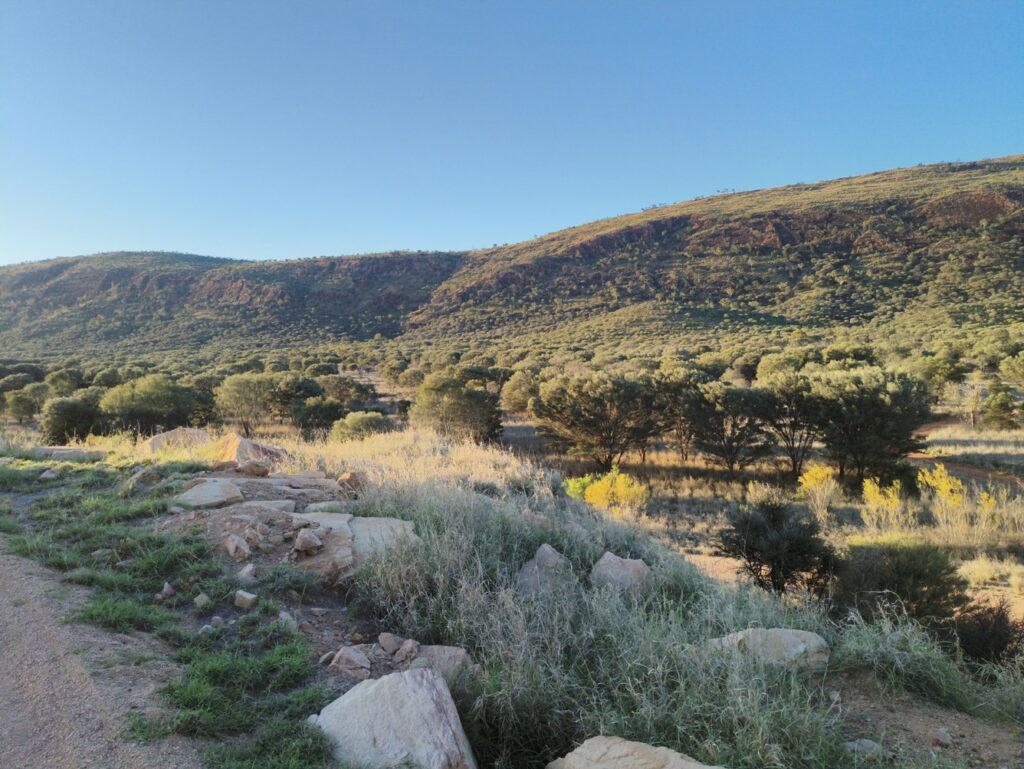
Our Sacred Country